
 EN
EN  DE
DE 
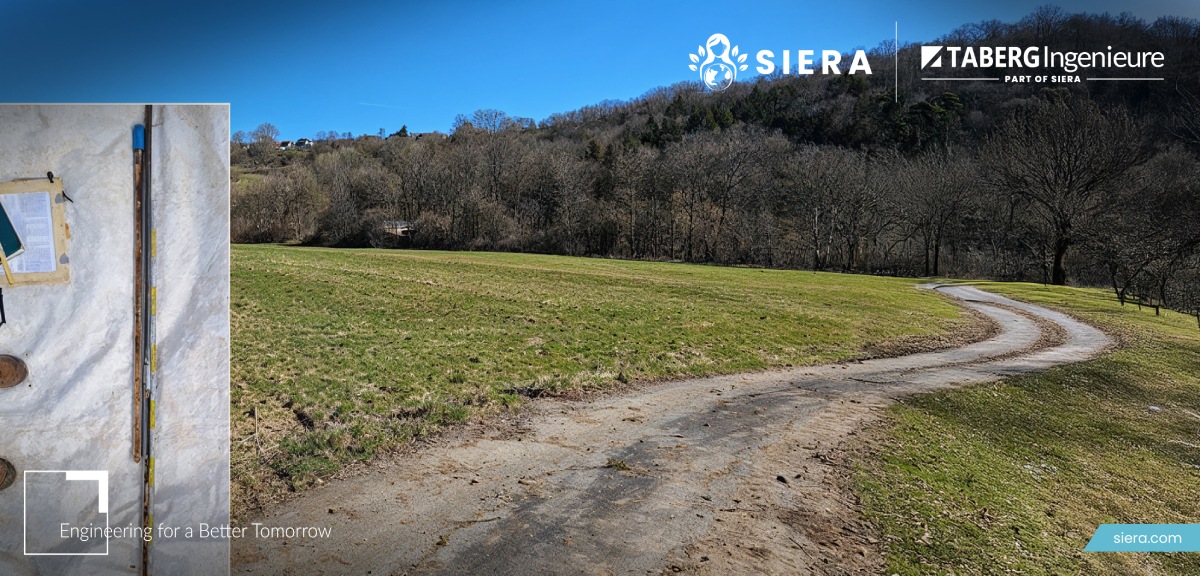
In the context of construction projects TABERG Engineers GmbH– Part of SIERA regularly deals with the preservation of pedological evidence. The aim is to systematically record, assess and document the condition of areas in connection with construction measures.
Infrastructure expansion and temporary space utilisation
Extensive construction measures are currently being realised in connection with the expansion of infrastructure. In addition to the actual impact areas, additional construction areas are often required on neighbouring land.
These include, among others:
- Construction site equipment areas
- Mounting surfaces
- Storage areas
Even if these areas are not part of the direct impact area, they can still have an impact on the soil and the environment.
Consideration of environmental aspects in planning
As early as the planning phase, care should be taken to avoid additional interventions in natural areas wherever possible.
If the utilisation of such areas cannot be avoided, the following aspects are taken into account:
- Soil protection
- Species protection
- Water protection
The aim is to exclude areas that are particularly sensitive and worthy of protection as far as possible.
Importance of mitigation measures and area assessment
Environmental mitigation measures must be reliably implemented during the construction phase.
A central component of this is:
- the finding
- the valuation
- the documentation
of the surface condition.
These form the basis for:
- the assessment of the effectiveness of mitigation measures
- Recommendations for recultivation
- Interim management if necessary
Timing and methods of the pedological investigations
The pedological parameters are recorded:
- before utilisation
- after completion of the measure
- If required during the construction phase
The following are used:
- Visual documentation
- Field investigations
- Laboratory analyses
Recording of soil physical parameters
The following aspects, for example, can be recorded as part of field investigations:
- Natural storage density of the soil
- Existing impairments (e.g. compaction)
In addition, undisturbed soil samples can be taken and analysed in the laboratory, for example with regard to:
- Dry bulk density
- Pore space distribution
Evaluation of soil chemical parameters
In addition to the physical properties, soil chemical parameters are also frequently analysed, including
- Yield potential (e.g. C/N ratio, nutrient availability)
- Environmentally relevant pollutant compounds (e.g. heavy metals, hydrocarbons)
Goal: Avoidance of permanent impairments
The results of the analyses contribute to this:
- avoid permanent impairments
- to restore the original condition of the areas in a manner appropriate to the location
In this way, natural soil functions can be preserved, which are of central importance for the ecological value of these areas.
Find out more about the preservation of pedological evidence and its application in construction projects on the website of TABERG Engineers GmbH– Part of SIERA
In conjunction with the activities of SIERA shows how engineering services contribute to the structured assessment of land conditions and the preservation of natural soil functions.
Engineering For A Better Tomorrow.